Unencumbered
How the future of adventure will be lighter

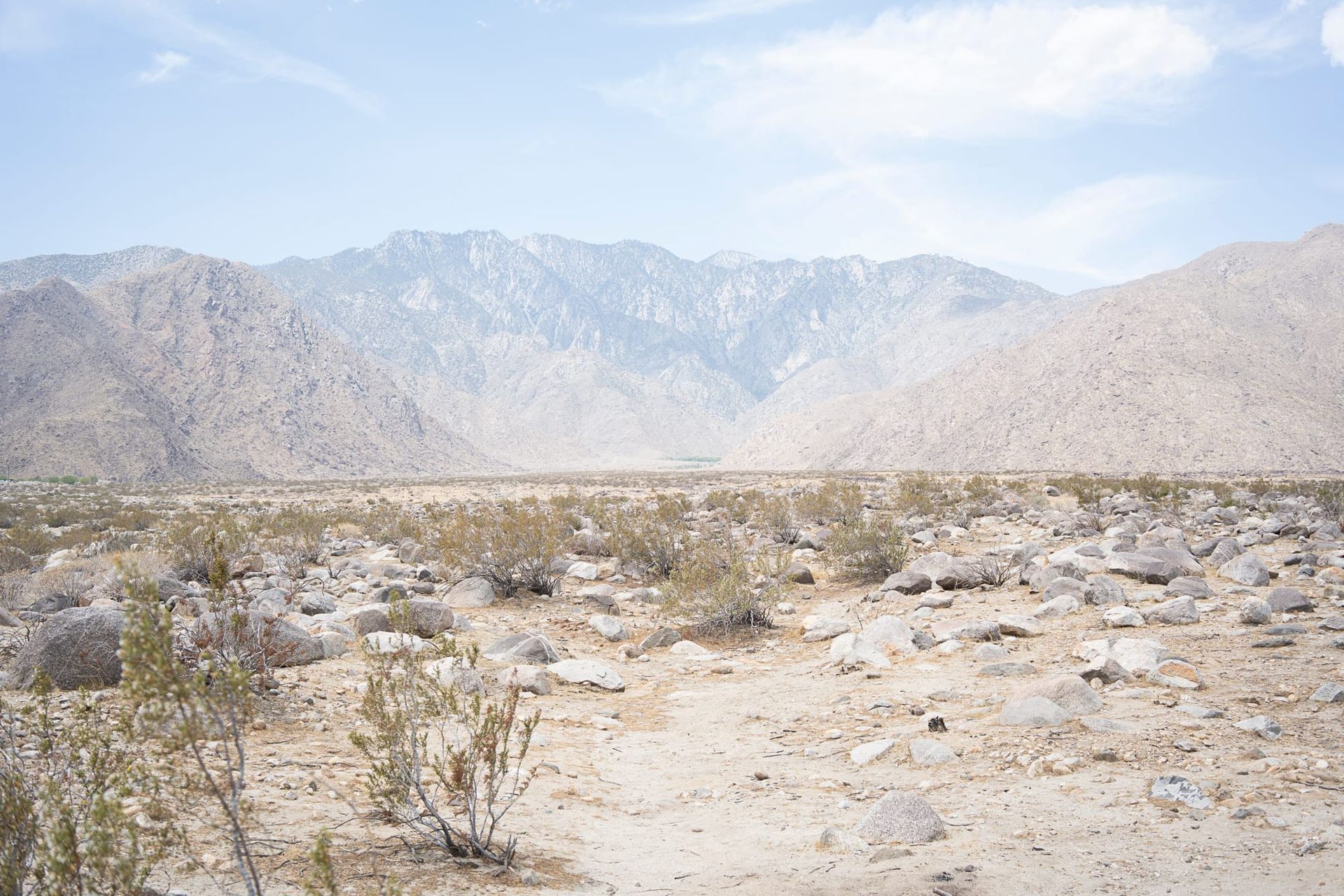
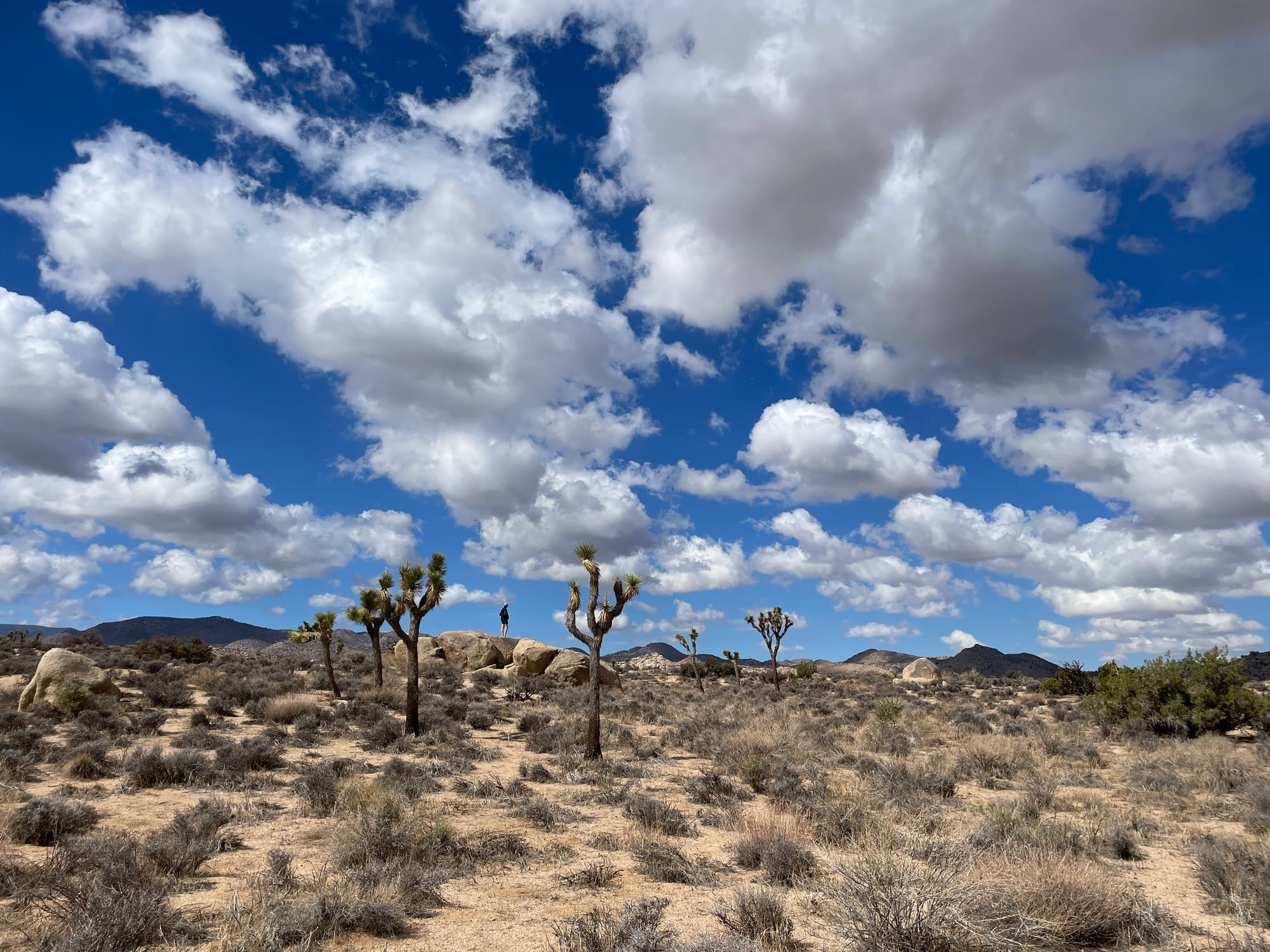
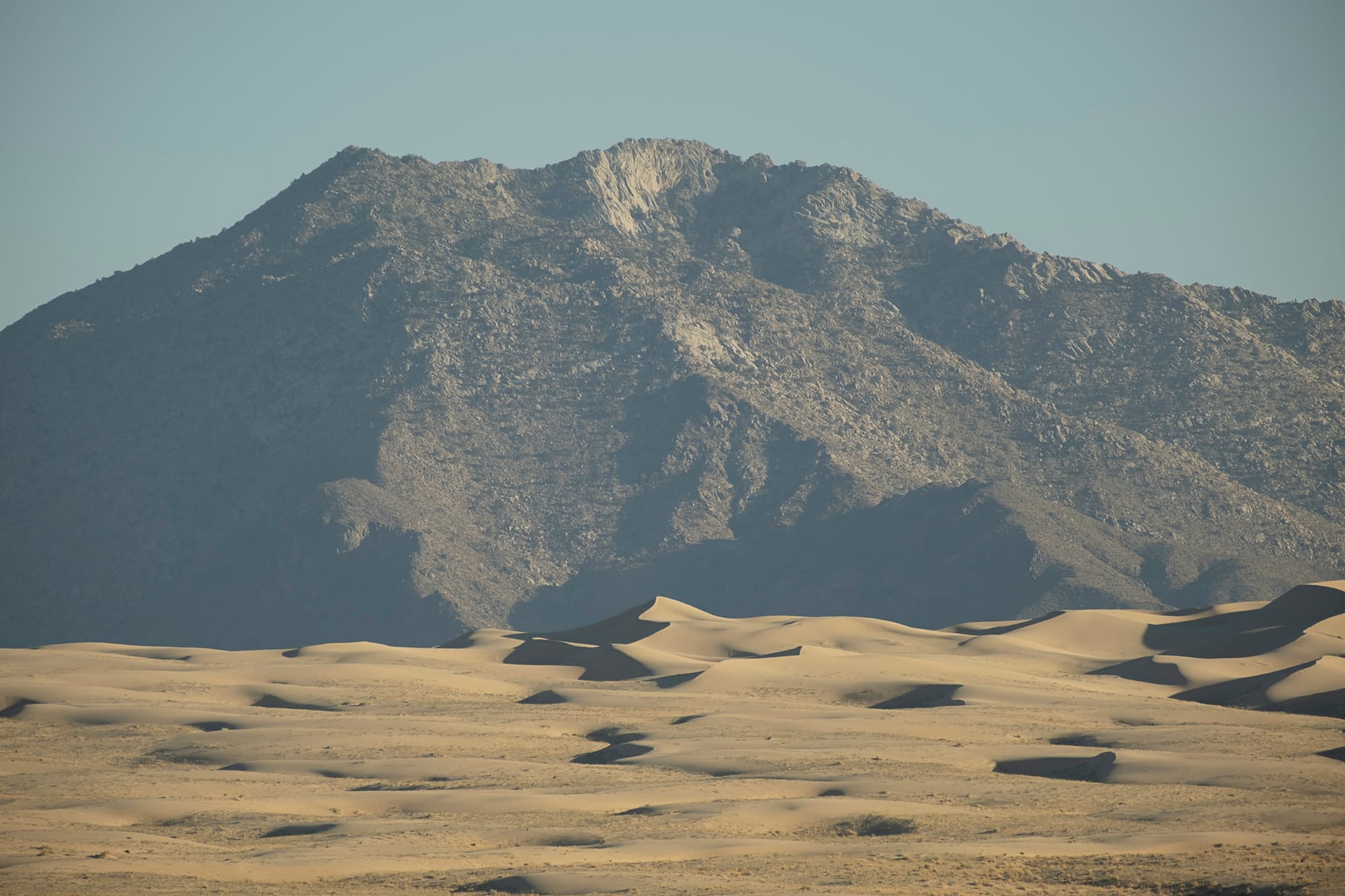
It was windy, as it often is in the desert, and it was sunny, and there was no one in this obscure corner of California’s Joshua Tree National Park, where I’d gone to clear my head and get the blood flowing in my legs. All in all, it was a typical weekday for me and, I suspect, the Mojave.
I shouldered my daypack and legged it down into a narrow canyon, hit the bottom, then struck cross-country up the sidewall of an arroyo, angling higher through cat’s claw and yucca and creosote. Wearing Carhartt work pants, I was in gross violation of the cardinal rule never to wear cotton when adventuring. On my feet were slip-on Blundstone boots, not sturdy laced hikers or grip-lugged trail runners. I carried no paper map, nor a compass. Nobody knew where I was. The people who write the rules would think me a danger to myself and possibly others who might have to search and rescue me.
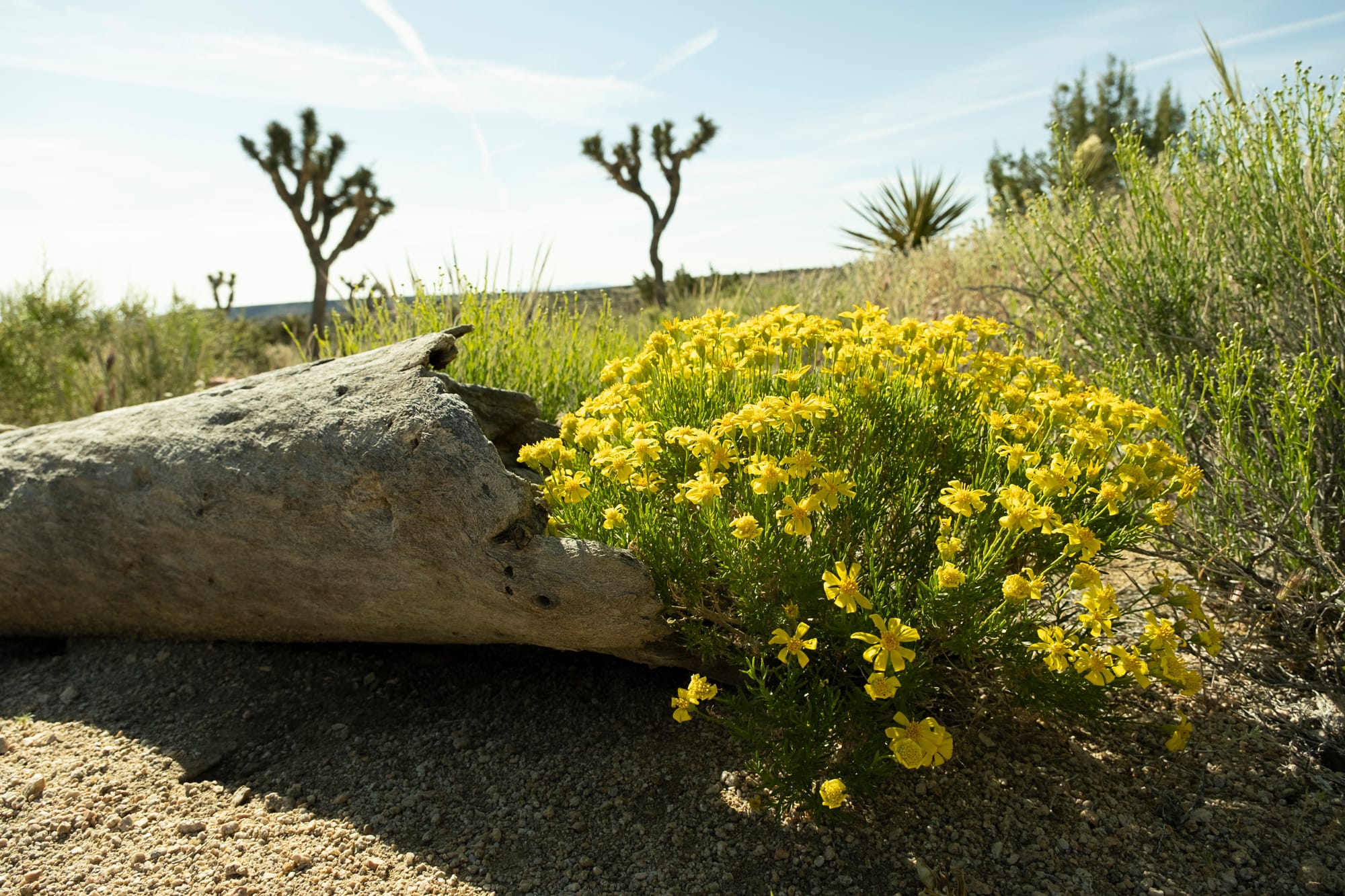
I scrambled to the top of a ridge and then made my way down it, heading north, descending one dragon’s back and ascending the next, no trail, losing vertical until my stroll turned into a hike. Hours passed. Sweat from my thighs darkened my pants. If I kept pushing, it could turn into an epic, but I’d save that for another day. Instead, I vectored to a marked trail and almost immediately ran into a very friendly man and woman, brightly clothed and smelling of soap. “Have you seen anything cool?” the gal gushed. I looked at the Joshua trees and blooming yellow rabbitbrush and deep magenta prickly pear fruit and wasn’t sure how to respond. “I saw a road runner!” she said. “Awesome!” I said.
They went on their way and I on mine. Nobody else crossed my path on the long sandy trudge back up to my truck. I arrived footsore, but my feet would have been sore even in hiking shoes. The trousers were dry before I got out of the park.
My kids grew up, as kids often do, and my wife and I decided to view our empty nest as an opportunity, not a destination. Might a cabin in Mammoth be in reach? Okay, how about in Big Bear? Climate resilience was top of mind, along with access to wilderness and mountains, as well as avoiding black flies, gnats, mosquitoes, hurricanes, flooding, wildfire smoke, high property prices, humidity, and crowds. That left New Zealand, but they wouldn’t take us, plus it was a little far, even for long weekends. In the end, we realized nowhere was much safer than any other, and also that Mojave Desert land was close to home and within reach financially. Ready to give life a good stir, we bought five untouched acres near Joshua Tree. Five acres of empty windswept high desert dotted with greasewood and yuccas, located in a narrow peninsula of private parcels surrounded on three sides by BLM wilderness and national monument. I felt like a farmer, or something.
For two years, we camped there in a large canvas tent, until historically strong winds shredded it. In its place, we found the smallest, cheapest used Airstream we could afford. There’s a big dent in the back and a bunch of scratches. The bed is tiny. Cell signals don’t reach. We use wag bags because we don’t want to fill the black water tank.
Every morning, as I drink my coffee and write in my journal, I note where the sun rises over the mesa and plot its path. I wander the land in slanting light, coffee in hand, and greet the plants I am coming to know as individuals. There are eleven Joshua trees, three of which are rigid and straight; I call them Monday, Tuesday, and Wednesday. Another is wild and twisted and psychedelic; I call that one Saturday. The high point of this rolling terrain is graced with a large, thriving juniper, a female rich with blue berries. Under another juniper, a couple of doves raise their babies in the spring.
Each year seems marked by some fluorescent natural event. One fall it was grasshoppers, a plague of them, crunchy, buzzy, and hoppy; I swam through clouds and learned to wear a bandito bandana so they wouldn’t fly into my mouth. Another year belonged to the chia, with its deep violet, Seussian blooms: purple mesa’s majesty. Then there was the year of scorpionweed, scorpionweed ad infinitum, so pretty in flower but insidious with its itchy irritating hairs; if I walked anywhere, my legs were covered. Lots of f-bombs that year.
Mornings are silent at the camp, except for birds gleaning breakfast. No traffic, just the wind. In every direction, mountains. A mile to the west there’s a house, but otherwise it’s nothing but desert. This is how we all lived, once, waking to a breeze and the vast sweep of sky above.
It’s overwhelming how much is changing, right? I mean, it’s not just me. Everywhere you look, the ground is shifting, the furniture rearranged, old words have new meanings, new words with strange meanings, once reliables now unpredictable. I have felt dislocated, disassociated. Confused, anxious, uncertain.
Also, excited. The world is demanding a new way, but it’s also showing us one that might return us to where we’re supposed to be. To a place that feels right. As Rebecca Solnit wrote in Adventure Journal, “To do what the climate requires of us does mean giving up some of the profligacy of this era, some of its wasteful excess. It’s also an opportunity to rethink who we are, what we need, and what we desire. What if, instead of money and possessions, we imagined wealth as consisting of joy, beauty, friendship, community, closeness to flourishing nature, clean air and water, and good food produced without abuse of labor or nature?”
My friend Breck used to teach at the Boulder Outdoor Survival School in Utah. The story was, every year after their programs ended for the season, he would go on long walkabouts in canyon country, carrying nothing but a full-tang knife he made himself, a water bottle, and a wool blanket. One year, he walked from Boulder to Santa Fe, New Mexico. You want adventure? There you go.
When I was a grom, I had two pairs of shoes, Converse All-Stars and something nice for church. The Converse were on my feet for my first backpacking trip and summer Boy Scout camps. Somehow, I made it to the adult side of childhood without light hikers, Gore-Tex boots, approach shoes, clip-on bike shoes, camp sandals, water sandals, or trail runners. Does it change our relationship with the world (and ourselves) when we think we need eight types of shoes to go outside? Yes, and probably not for the better.
My father’s response to growing up poor during the Depression was to scavenge, repurpose, and hold onto whatever he could. He was a mechanical engineer and the son of a carpenter, and he crafted all manner of home improvements from cast-off materials. A lot of his supplies turned out to be worthless, though; after he died and we sold or gave away everything people would take, I had to rent two dumpsters to get rid of the rest. Buddhists say attachment, or “upādāna,” is suffering, but some attachment isn’t necessarily bad. I am very attached to coffee and so far, so good. But they’re right, sorta. Attachment can be suffering. It can also be weight.
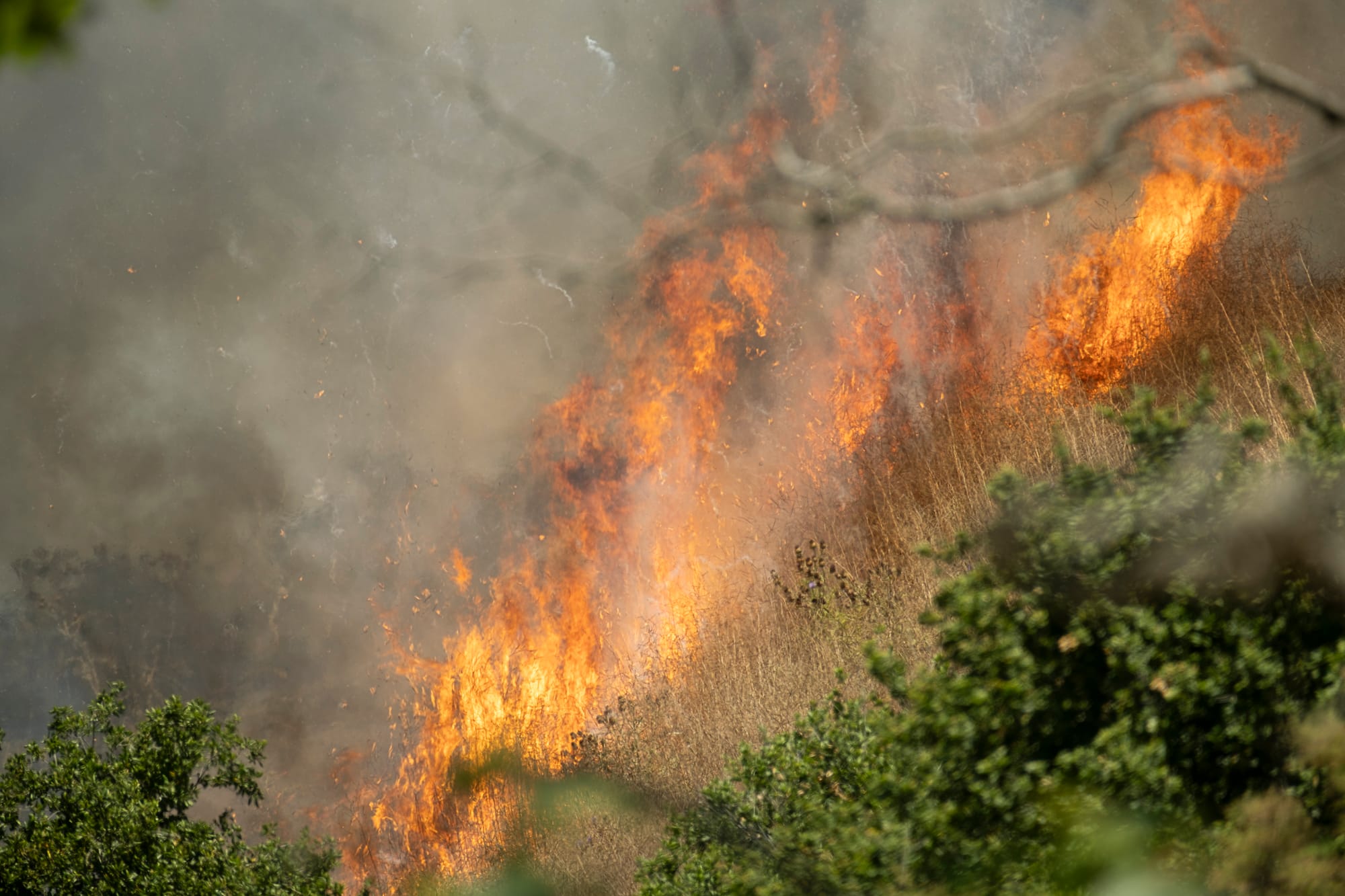
In October 1993, three weeks after our wedding, an arsonist lit a fire in the wildlands north of Laguna Beach. Howling Santa Ana winds drove the blaze down Laguna Canyon toward the coast. Much of Laguna was being evacuated, and we sped home from work. Ash fell like snowflakes, but the order never came: We were far enough south to stay where we were.
That was the first time I packed to evacuate. It was not the last. I have learned to keep clothes, food, and camping gear in my truck at all times. I have made a list of what gets grabbed and in what order. The first night of the 2025 Palisades and Eaton fires in Southern California, I put my memory box, laptop, and backup hard drives in the backseat, just in case. Now if I hear sirens layering upon one another, signaling a big event, I go outside and look for smoke. It’s been two years since a wildfire came near, and that one was only a quarter-mile away. Too close for comfort.
It’s a fascinating process, choosing what to carry and what to leave behind. This last time, as flames raced toward Malibu, I looked around the house and wondered what I would replace after a fire. If I wouldn’t replace it, why do I have it now?
My friend Mark helped me set up the portico of the canvas tent. This was, of course, before it blew down. He’s six feet and a million inches, so he could hold the roof support while I set up the side poles. Afterward, we sat outside the tent, ate chips and guacamole for dinner, drank beers, and poked at a campfire, its sparks shooting orange stars skyward. Like ghosts, two giant dogs materialized out of the darkness and scared the bejesus out of us. Big as wolves, white as polar bears, their tags read Casper and Lola. One of them, I think it was Casper, plopped down in the dirt and kept us company long into the night.
Later I learned they are Great Pyrenees and reside with Emmanuel, who lives about a mile away and tends a flock of Nubian goats. Emmanuel’s business is taking people on walks with the goats; I haven’t joined him yet, but everyone who’s gone says it’s one of the coolest things they’ve ever done.
Lola and Casper are free-range dogs. I see them often when I’m exploring, and sometimes they join me on my hikes. They don’t wear sling bags or record their steps or take pictures to post on Instagram. One morning, Lola followed me back to the Airstream and fell asleep in its shade for a couple hours. I sat in the dust and scratched behind her fuzzy ears. Not sure who was happier about it.
I want to be a free-range dog. And maybe a hiker goat.
The first forty years of my friend Justin’s life were defined by his passion for surfing. His garage is filled with boards. Today, he can hardly muster the motivation to paddle out. He recently caught the mountain biking bug, and now his garage is filled with bikes, too. Yet his dream for old age is to be one of those lean, gray-haired dudes striding the mountains of coastal California with ropy, vibrating leg muscles and nothing on his back. He gets far more excited watching fish swim in cold-water streams than surfing sessions and the only time he tells me about his rides is when he crashes.
We often talk about how we’ve drifted away from the pursuits that once defined us. Is there a limit to how many times we can experience a sensation before we’re done with it? Before we’re burned out or bored? I’m dubious. I cannot imagine growing tired of deep powder skiing or bombing a flow trail. And yet I don’t do either as much as I once did.
How to explain this? Partially because for everything there is a season, I think. But there’s more to it than that. The macro currents of culture and climate and age are impelling me toward a different path, less burdened but richer with connections. Whatever the future brings, detachment seems in order. Less to carry, less to maintain. Less to own, less to lose.
When I sold my seventeen-foot fiberglass sea kayak, I had to say goodbye to the sea kayaker I thought I was. The same for my climbing rack, harness, ice tools, and identity as an alpinist. I’ve never met an adventure sport I didn’t love, and I have owned scuba gear and prone paddleboards and huge backpacks and small backpacks and longboards and a warehouse of wetsuits. Every time my kit passed into other hands, it felt like the loss of part of me.
It wasn’t.
It’s funny, my night dreams are still filled with pow, but my day dreams are about exploration. Joshua Tree National Park is almost eight hundred thousand acres. There are an infinite number of peaks, mountains, hills, and rock piles to climb. So far, I’ve summited thirty-two.
That’s just JT. North of our land is Mojave National Preserve at a million and a half acres. Sand to Snow National Monument, a stone’s throw away, is one hundred fifty thousand acres. San Gorgonio Wilderness is ninety-five thousand acres. San Bernardino National Forest is eight hundred twenty-four thousand. Chuckwalla National Monument is more than six hundred thousand. All are within an hour’s drive. How many lifetimes is that?
For so many years, my desert thoughts carried me over the Mojave and came to rest on the Colorado Plateau, where the landscapes are wilder and prettier, the remoteness remoter, the rock art more sublime. On most days, the Mojave looks drab; you will search for new words to describe brown. In a beauty contest, it will always lose to Canyonlands. But some magic, maybe the best magic, can’t be seen. I have taken a class on identifying desert plants and one on snakes. Up next are field seminars on Indigenous foodways and, in the fall, a workshop on flintknapping. I’m thinking about pursuing the California naturalist certification. I am still an initiate, but every time I learn the name of something, or when it blooms, or what it eats, more of the desert becomes a part of me. A part of me that weighs nothing.
My friend Tim is an art professor at a college in Riverside. The bed cover of his vintage Tacoma is stickered with portraits of early twentieth-century thinkers he admires. He asked me to send him a Cairn Kicker t-shirt, size small—he’s compact and lean, and if he grew his beard out, I believe he would strongly resemble one of those wild philosophers. Not Rasputin, but maybe Rasputin’s less mystical second cousin.
Over the past year, Tim had been sending me suggestions for long walks, a traverse of this range, a crossing of that one. Then he decided to climb Southern California’s highest peak, 11,503-foot San Gorgonio, from Whitewater Preserve near Palm Springs, a little bit on the Pacific Crest Trail and the rest off-trail. I wasn’t ready for nine thousand feet of climbing, so I planned to accompany him for part of the first day, then peel over a ridge and down Mission Creek, where we’d leave my truck.
When the day came, I found myself nervous about whether I could keep up with this younger, lighter, fitter, goal-oriented man. That turned out not to be a problem. We spent ten minutes at a trailhead display chatting with people from a local tribe. We’d barely gone a hundred yards before we stopped to look at something on the ground that caught our attention. Tim was thoughtful and open. We jumped into the deep end right away, and I had to slow my pace to think properly before I responded. He told me he was often lonely for people to have adventures with and I acknowledged I was, too. He shared a manifesto for creativity that he’d written, something he hadn’t shared before, and he was hesitant whether his creativity needed a manifesto, but he wanted to try. I was honored he told me about it. When I worried we should be moving faster, I said, I don’t want to hold you up, you have a long way to go, he said, I’m in no hurry.
Tim surprised me with gifts of a hardbound Hahnemuehle gray-paper sketchbook and pen and pencil. We were planning on drawing together, but instead, we sat in front of the Whitewater River with a view to the summit of San Gorgonio and he gave me an art lesson. He showed me how to place a visual anchor in the foreground, how to render rocks, and what to leave out. We discussed the shifting light high on the mountain and how to convey it in ink. I glanced at my watch. We’d been so caught up in conversation and wonderment, we’d gone three miles in three hours.
With the shadows getting long, we hugged goodbye. Tim headed north to camp and I went east to find a place to ford the river. It took me two hours to cover six miles, about half of it in the dark with me trying to use my night vision and failing. I kicked a cactus and had to stop and tweeze the spines out of my big toe. I’ll remember that, but that’s not what made the hike memorable, not by a long shot.
Marie Kondo as climate leader and life coach? She was for me, shaking me out of the stuckness and complacency I’d long felt. On a multigenerational family vacation over the 2018 holidays, we binge-watched her Netflix show, Tidying Up With Marie Kondo. Her message that material things should spark joy resonated with me, but not as much as the idea of thanking something for its service and passing it on. It felt like permission to let go, and I thought about all the possessions I wasn’t using and how someone else could be. Instead of lamenting the sunk cost of an object, I saw what I’d paid as rent and myself as steward, caring for it until it landed in the next user’s hands.
Because I’m compulsive, I mean, ahem, because I’m professionally curious and research is part of my job, I followed Kondo deeper into dematerialization. I read about Swedish death cleansing and Hideko Yamashita’s danshari philosophy and Fujio Sasaki’s extreme minimalism. My friend Breck remained a role model, as did Vaughn, a guide friend based in Southern Utah who wears Chaco sandals and bare feet in all conditions and never uses a map. My closets got bigger, my garage easier to park in. It took less time to pack for road trips; I did fewer loads of laundry. I no longer felt guilty about my dusty kayak because it was someone else’s kayak.
Giving up my skis or bike would feel like cutting off a part of me, and I don’t see that happening. The sensations they allow are the best I’ve known, and there’s still much joy being sparked. And yet, a part of me wonders. What other adventures would open to me if my kit only consisted of a knife, blanket, water bottle, and my own two feet? How much more could I learn about nature and people with less standing between us?
Adventure is a way of living, and while there’s absolutely nothing wrong with the tools and toys that enable it, it has never been and never will be about the stuff. It’s about going into the world with an open mind and an open heart, a willingness to take risks, and the embrace of discomfort in return for greater growth. Today, houses are burning and flooding and we are being taught that attachment is suffering whether we like it or not. I try to see this less as a tragedy than a chance to find contentment and connection by living anew.
What we really want—what we have always wanted—is to know we belong to place and to people. I’m finding that in the Mojave, for which I am eternally grateful. But it wouldn’t be happening if I still held tight to performance adventure, if I wasn’t willing to go for a walk instead a run, if I hadn’t gotten down on my hands and knees in the dirt and watched a bee gather pollen from a tiny desert bloom. I cleared the space, and good stuff came rushing in.

Field Notes from a Very Cool World