The Paper Airplane Collector


A paper airplane is constructed of optimism, hope, and whimsy. Do people still make paper airplanes as much as they used to, now that the offices that still exist don’t use as much paper? More to the point here, do New Yorkers?
From 1961 to 1988, Harry Smith collected, labeled, and cataloged paper airplanes he found on the streets of New York City, where he lived most of his life. Smith was a renaissance man of the avant garde, an experimental filmmaker and Grammy-winning musicologist. The Getty Research Institute, which houses 229 linear feet of Smith’s collections in 340 boxes and four flat-file folders, called him a “polymath…collector of American vernacular art, music, and artifacts.”
Smith, who died in 1991, was fascinated with finding patterns, and while it isn’t clear what patterns he was seeking in paper airplanes, he was obsessed with them. One friend noted, “He would run out in front of the cabs to get them, you know, before they got run over. I remember one time we saw one in the air and he was just running everywhere trying to figure out where it was going to be. He was just, like, out of his mind, completely. He couldn’t believe that he’d seen one. Someone, I guess, shot it from an upstairs building.”
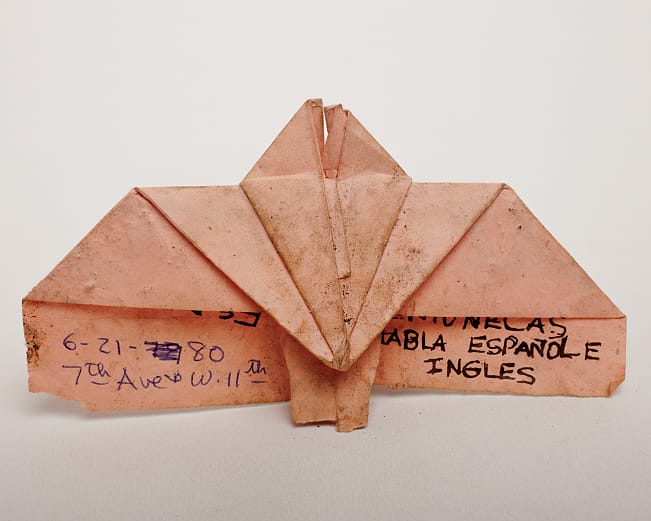
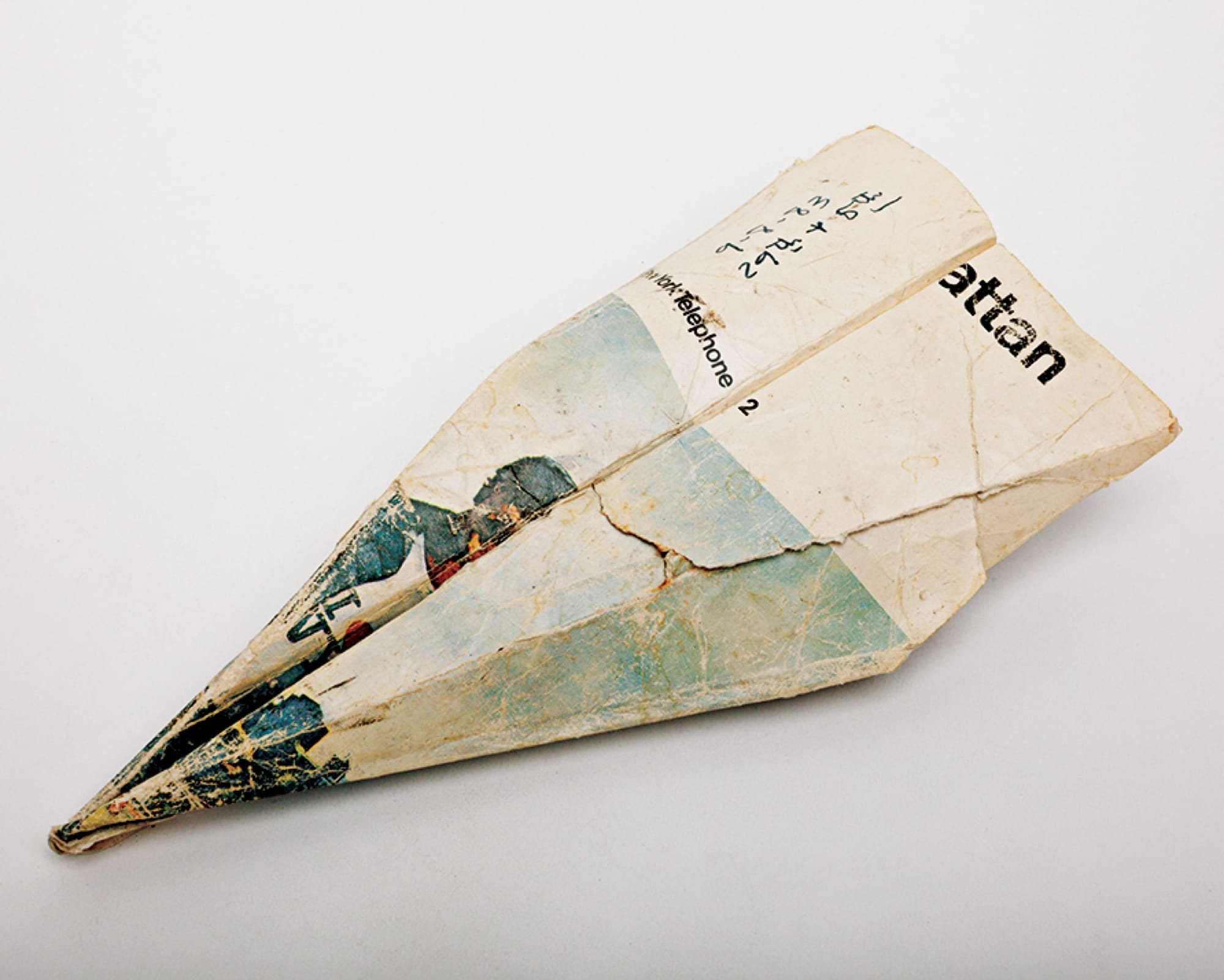
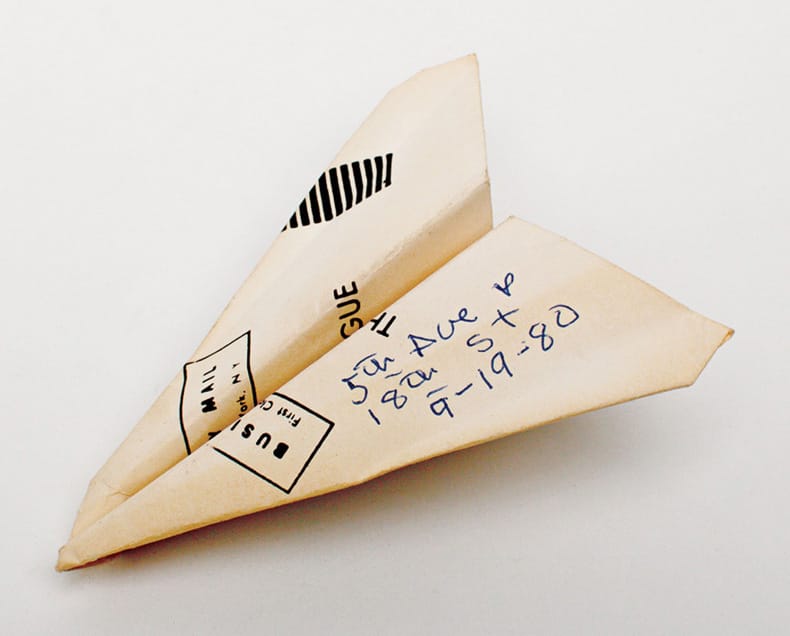
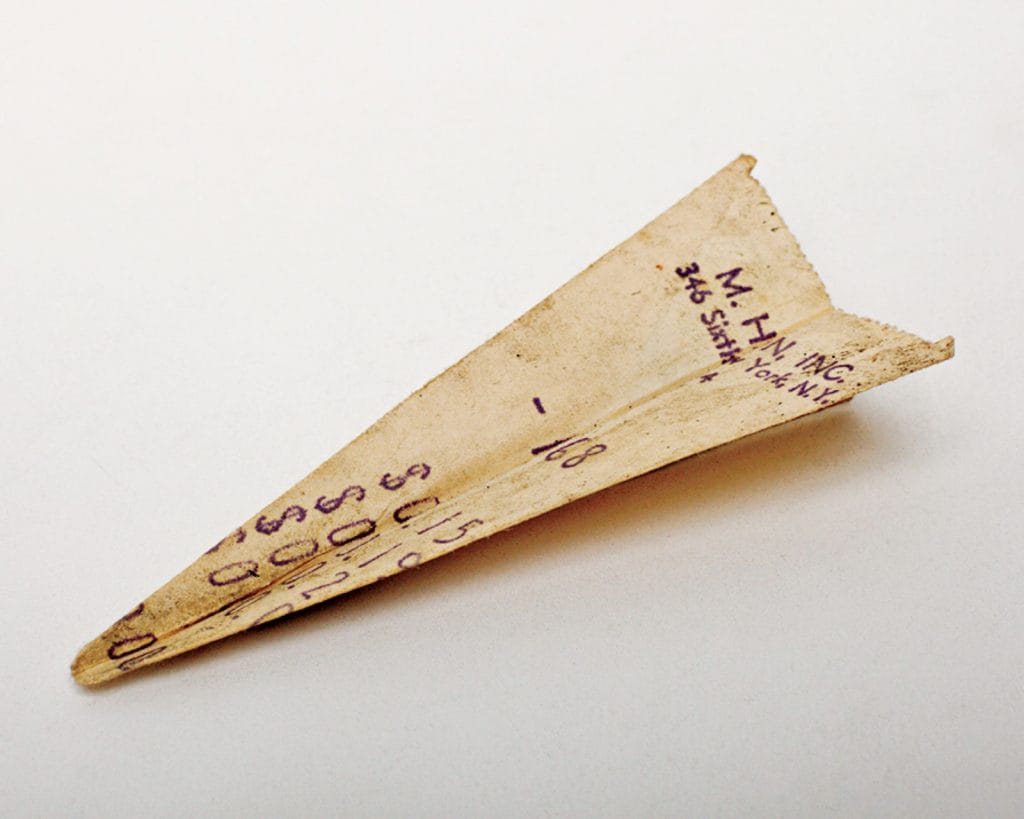
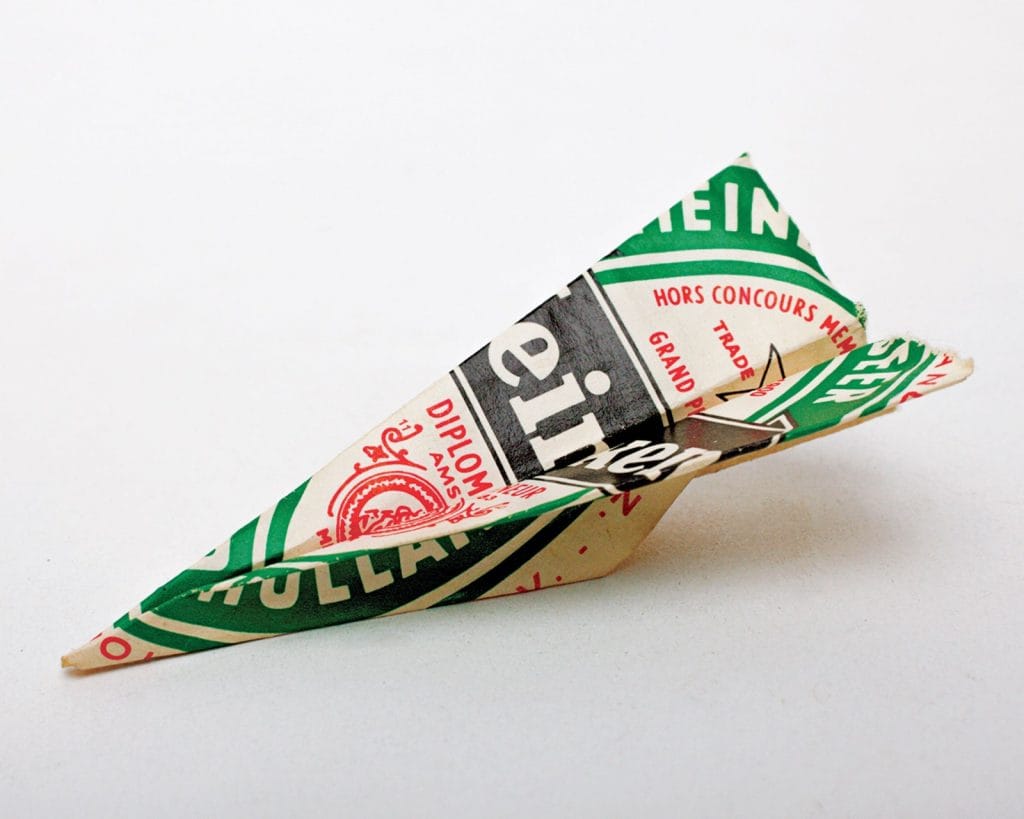
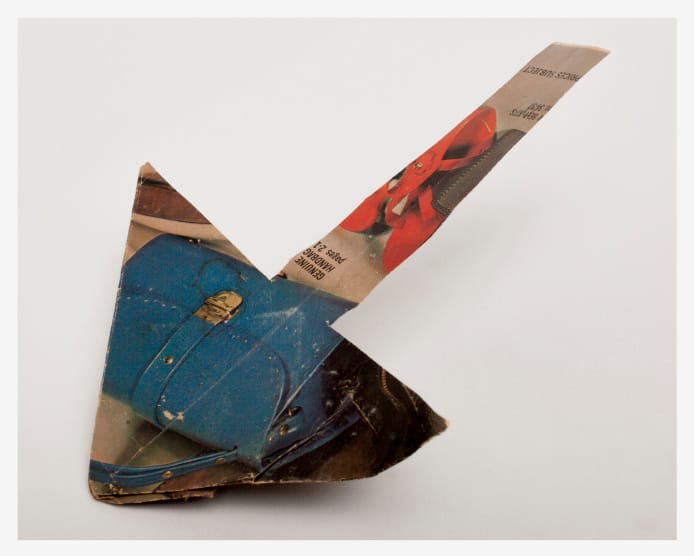
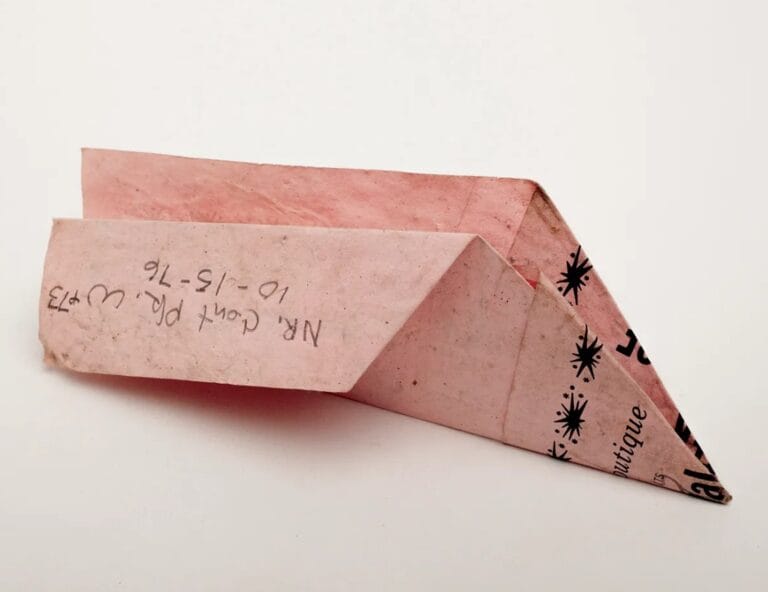
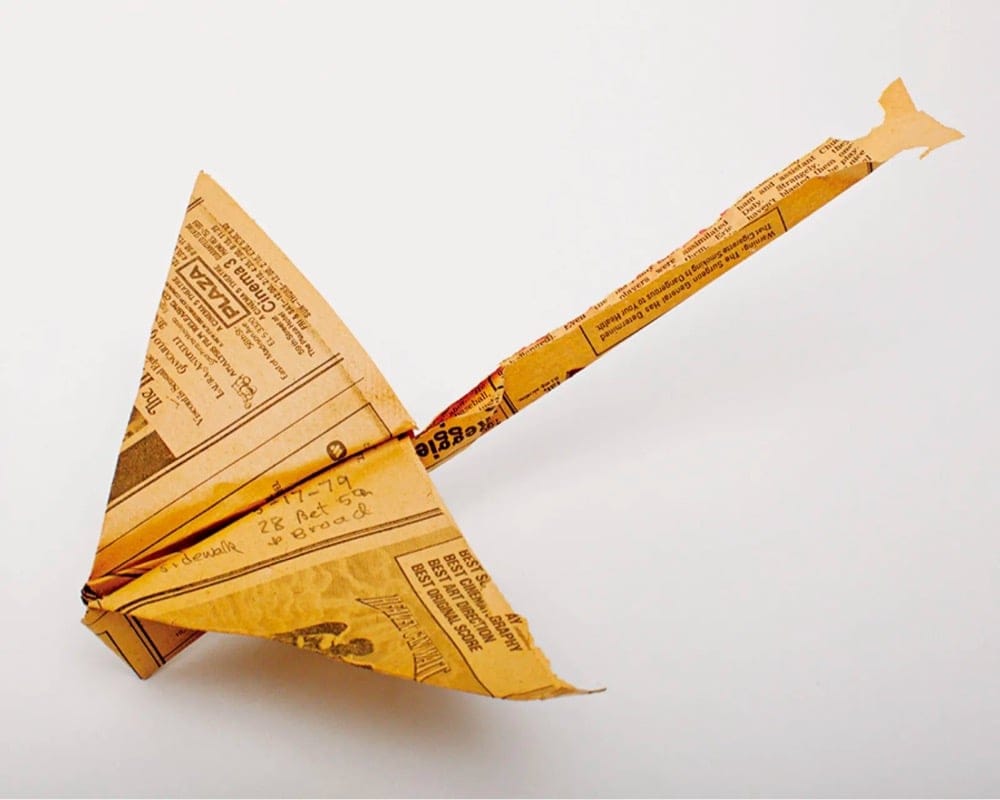
Once he grabbed the airplane, he noted its location in pencil, defolded it, and filed it away. Today, 251 of them exist, archived in a box that went first to the Smithsonian Institution and then to the Anthology Film Archive, but there likely were many, many more. Rosebud Feliu-Pettet[^ Her 2015 obituary said, “Rose Rosebud’ Feliu-Pettet, muse of the Beats and avant-garde, fixture of downtown Bohemia, and a gifted memoirist, died this past Monday…Married three times (to petty criminal Tex Flanagan; to a Danish harbor worker, Karsten Holm; and to the English-born New York City poet Simon Pettet)...runaway hippie, godmother to the punks, later seasoned survivor in Hell's Kitchen, and a believer to the end in the old values of love, human kindness, human compassion, simple decency.”], whom the unmarried Smith called his “spiritual wife,” said he had multiple boxes of them: “more than two, less than fifty.”
The surviving 251 planes are celebrated in the paperback book Paper Airplanes: The Collections of Harry Smith. They provide a glimpse into a long-gone city. One is constructed of the cover of a Manhattan phone book, another from stationery at the Hotel Albert. There’s a repurposed Heineken beer pack, an anti-Vietnam war flier, and a menu from Max’s Kansas City. The most-enchanting might be a connect-the-dots worksheet showing a child gazing up and saying, “Oh! how I wish I could fly, There's so much to see from the sky.”
Smith collected lots of stuff, including Ukrainian Easter eggs, string figures, and typewriter drawings, a passion sparked as a teenager. He grew up in rural Washington, and his mother, Mary Louise Hammond, taught on the Lummi Indian Reservation from 1925 to 1932, where he was drawn to the art and music. By 15, he’d recorded songs and rituals of the Lummi, as well as the Salish and Swinomish, and put together a dictionary of Puget Sound dialects. He also started collecting American folk records and other vernacular music, which led to his three-volume Anthology of American Folk music, the worked that garnered the Grammy.
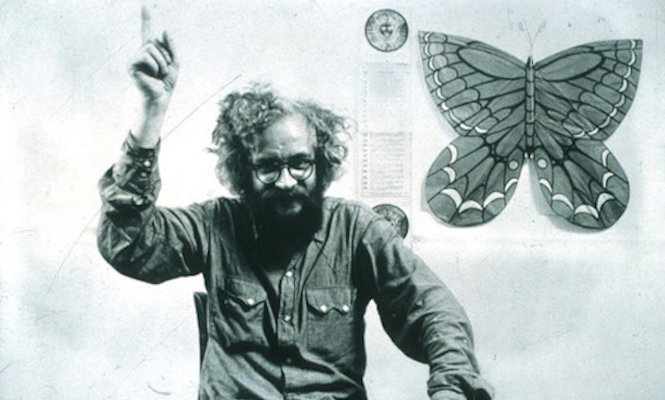
Smith's parents did not get along and lived in separate houses, meeting only at dinner time. Although poor, they gave their son an artistic education, including 10 years of drawing and painting lessons. For a time, it is said, they even ran an art school in their house. “We were considered some kind of ‘low’ family,” Smith once said, “despite my mother’s feeling that she was [an incarnation of] the Czarina of Russia.”
Marijuana was Smith’s gateway drug to a life spent outside the margins of conventional culture. In 1944, at age 21, he attended a Woody Guthrie concert in San Francisco and smoked weed for the first time. It changed everything. He soon quit college at the University of Washington and moved to the Bay Area, where he fell in with Beat luminaries like poet Allen Ginsburg.
Smith was itinerant and often drunk. From 1968 to 1977, he lived at the Hotel Chelsea in New York, after which he was sometimes stuck at hotels where he would owe so much money he couldn’t leave, and he was too famous just to be thrown out. For many years he subsisted on a diet of raw eggs, vodka, and amphetamine. After getting “stranded” at the Hotel Breslin by debt, he was rescued by Ginsberg, who took him as a roommate. It didn’t last: Ginberg’s blood pressure skyrocketed around Smith, and his psychiatrist said he had to throw him out. The poet arranged a job for Smith in Boulder, Colorado, teaching shamanism, and paid his rent—which Smith spent on booze.
Yeah, he was a character: artist, reprobate, curator, anthropologist. And whatever he saw in those airplanes, there must have been something of what we all seek when we toss them in the air: that moment of joy as our dreams take flight.
Field Notes from a Very Cool World