A Legacy of Creativity and Courage

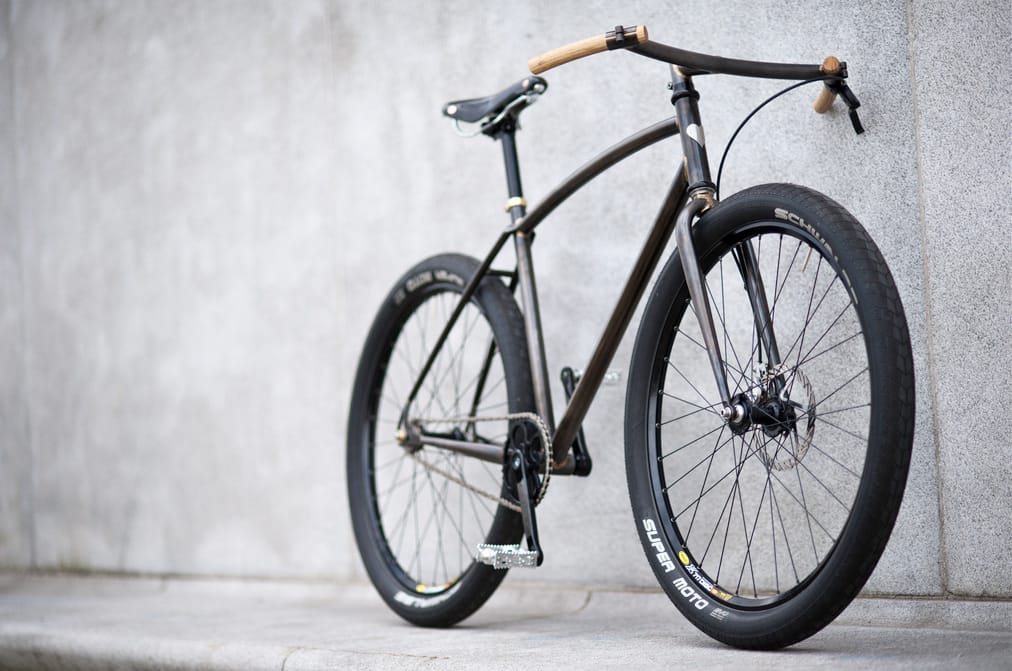
Ezra Caldwell built some of the prettiest bikes I’ve ever seen, especially one particular newsboy single-speed, painted stealthy black, with its top tube curved just so, like a sleepy cat arching its spine. Ezra made just twenty bikes a year, each steel, unique, low-key, and elegant. The stainless Fast Boy head badge was a heart. “What I find beautiful in a bike is different,” he said in 2013. “Maybe I’m talking myself into a corner here. I’ve always been a bit of a minimalist. My favorite artists are those that practice restraint, not those that seem eager to let you know about their virtuosity. I remind myself constantly not to stand too close to the bike I’m building, but to stand far enough away that I can take it in as a whole. It’s easy to get seduced by the details.”
Ezra died of colorectal cancer in May 2014, more than ten years ago as I write. No one should die of fucking cancer, and Ezra passed far too young. But you know the cliché, that everyone dies but not everyone lives, and very few people lived with the creativity, fearlessness, and sangfroid that Ezra did. He was an inspiration to me when he was alive, and a decade-plus later, I continue to think of him regularly, not because we were close, but because the man was so full of passion for life, it touches still me today. He continues to inspire, and we should all be so blessed.
Caldwell grew up in Putney, Vermont, in a town of twelve hundred. After high school, he took a year off, thinking he might crew sailboats or roam the Caribbean. Instead, “I found my way down to El Salvador, to a guerrilla refugee camp community. I spent six months basically living in squalor. It was incredible. For an eighteen year old it was a total shock to the system,” he said. “To be somewhere where it didn’t even matter if you had money because there was nothing to buy was just incredible. This community was purely a subsistence farming community.
“Before I had left, my mom had convinced me that I was constantly making things and that maybe art school was a good idea. I had been kind of a hick and worked on construction crews. The idea of being an art student at the time just seemed rather hilarious. I thought industrial design would be a way to have a slightly more practical life at art school. I had heard about this idea of designing products. In El Salvador, the only art being made was a shoemaker, a metal worker who made containers to hold grain, and a guy who had lost his hands and would paint the history of the town to be sold in the city. Going from that, which was very real, to art school just seemed very indulgent and fake.”
Nevertheless, he enrolled in an industrial design program at University of the Arts in Philadelphia, only to find the curriculum tedious and pointless. On a dare, he took a Brazilian dance class, despite having zero dance background, and liked it so much he asked to switch his major to dance. “The day after my first dance class I had a solo audition for the head of the department in my bike shorts and nothing else. I was in padded bike shorts, took off my shirt, and skipped around the room and did all this shit she asked me to do.” Miraculously, he got in. Perhaps even more miraculously, after graduation, he spent years touring as a professional dancer, pursued a master’s in dance in England, came back to New York City, taught for nine years, and formed his own dance troupe.
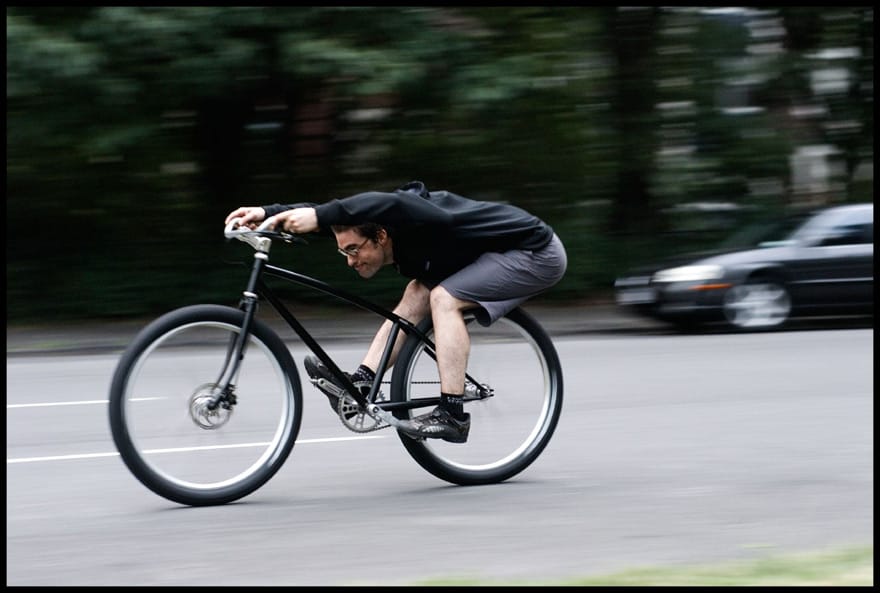
He traveled New York from his home in Harlem by fixed-gear bike and promoted cycling with the ardor of an evangelist. His dance students soon asked him for help finding bikes. For some, he found used bikes. For others, he bought frames and built the bikes from scratch. Then, “I was in a bike shop and overheard someone talking about how cool it would be to have wood fenders,” he said. “I thought, ‘I could make wood fenders!’ I went home and made some. That became a side business, Fast Boy Fenders.”
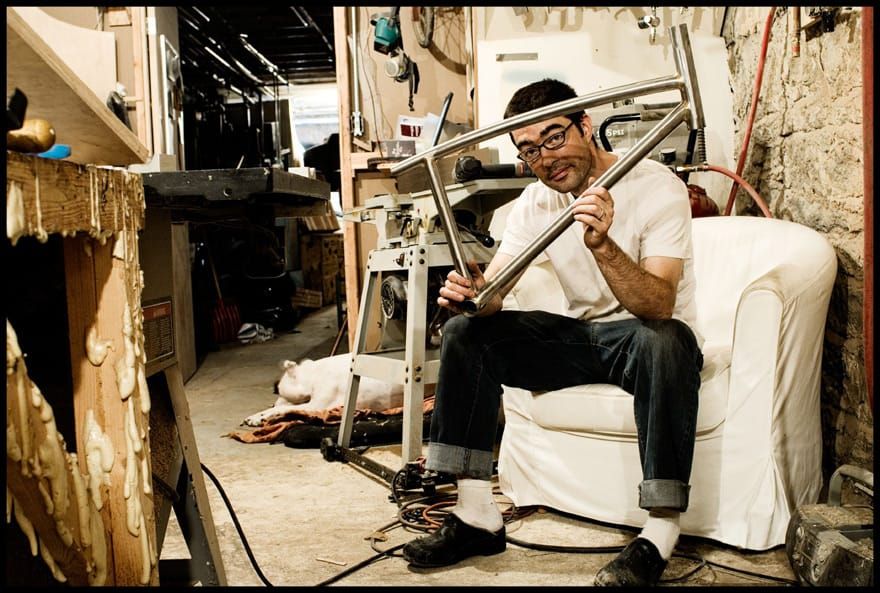
Ezra’s father is a woodworker, but Ezra was an artist, and the fenders were beautiful: bent, laminated, lushly stained. They blew up, but “I decided that I wanted to be doing the whole thing. I went down to Austin, Texas, to take some brazing lessons with friend and builder, Whit Moyer. Spent about ten days with him and then came back to the city and spent every penny I had on getting set up.” In 2007, Fast Boy Cycles was born.
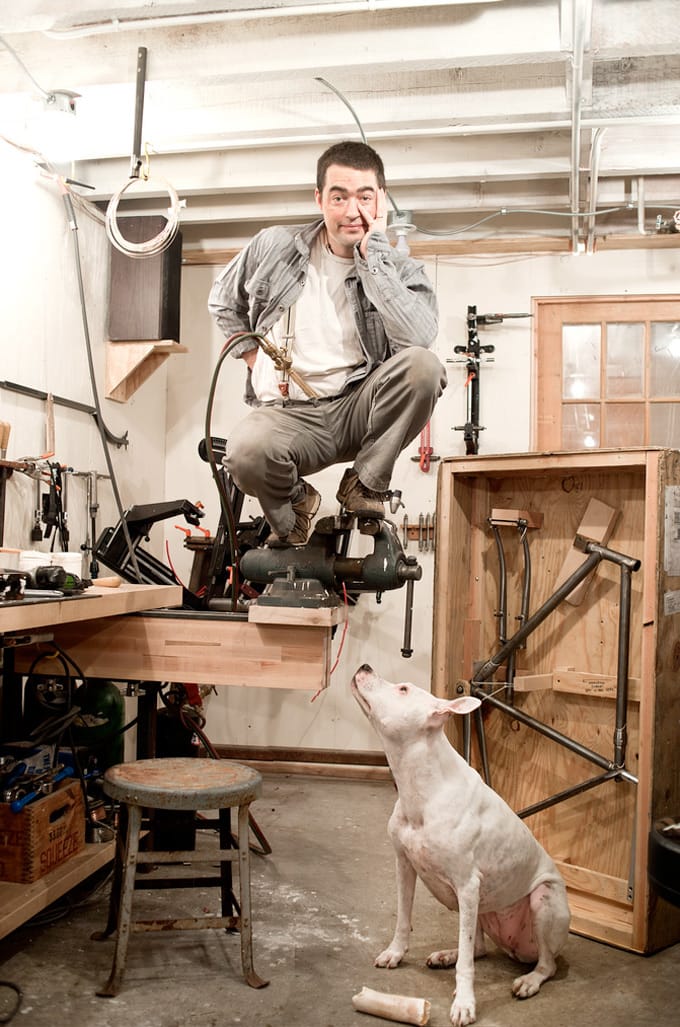
After months of pain in his abdomen, which he at first chalked up to constipation, in the summer of 2008 Ezra rode his bike to a gastrointestinal doctor, who diagnosed him with colorectal cancer. It was a brutal diagnosis—not just the cancer, but the doctor’s order to stay off the bike so as not to pressure the tumor. A bike builder who couldn’t ride. A few weeks later, he posted the first entry on Teaching Cancer to Cry, his new blog. Over the next six years, he wrote with warmth and humor and brutal candor of his journey, of having a colostomy bag, of building an “assless” bike with no saddle because he could no longer sit down and ride.
A January 2013 entry reveals his ability to share hard truths without self-pity.
“I could also pee like a big boy about a week ago, and now I’m resigned to peeing into a bag tied to my leg. Just like that. It’s just easier to go out into the world (or even just downstairs to make a cup of coffee) with an external catheter and a bag than it is to risk the anxiety of maybe having to find a couple of parked cars to dive between in order to suddenly pee (try finding parked cars in your kitchen while you’re making coffee!). The notion that I’m just forty years old and have had to simply accept that I am completely incontinent (and impotent) is a reality that I’d never have imagined even just a couple of years ago. You can throw a temper tantrum. You can dig your heels in and refuse. But what does it get you? Wet pants.”
Teaching Cancer to Cry wasn’t just about cancer. Ezra wrote lovingly of his wife Hillary, his dog Putney, his bike-making, his passion for photography (he was a damn fine photographer), his gourmet meals (he worked as a chef at a Thai restaurant while studying in England), his friends, and the people he came across in New York. He was a remarkable observer and a great storyteller, even when suffering pain and indignities.
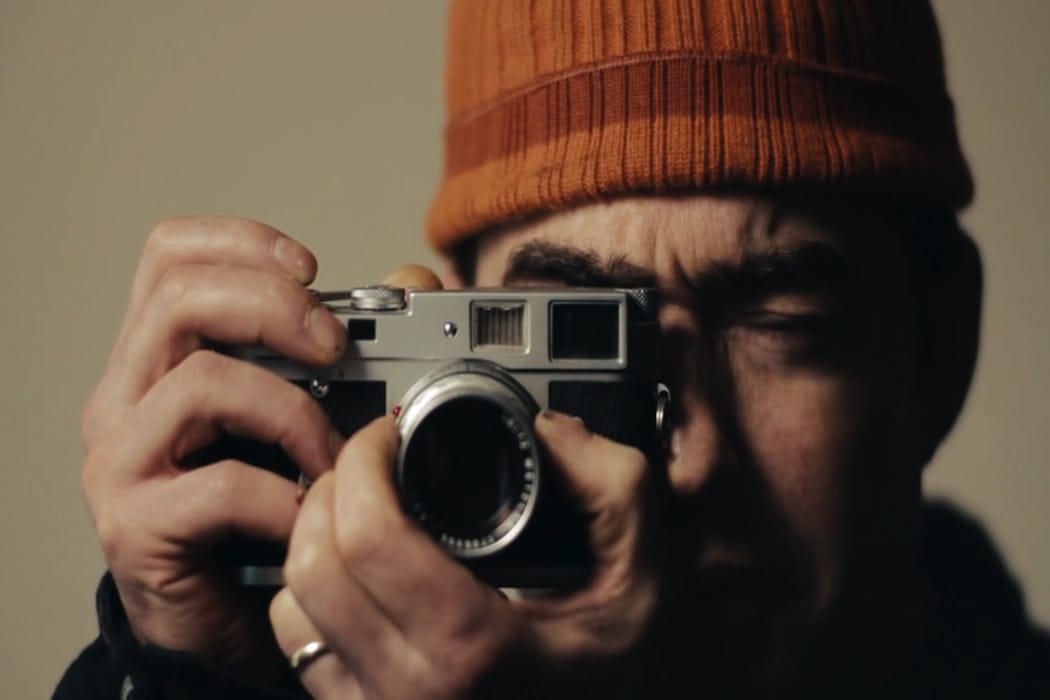
Ezra died on May 24, 2014. His obituary read, “Ezra decided a few years ago to forego further treatment for his cancer and spent most of his remaining months deeply engaged in the things that mattered most to him—making bikes and other objects, mountain biking, photographing the world around him, cooking, playing pool. As his capacities diminished, he seemed always able to adapt and find new ways to satisfy his passion for productivity and mastery.”
Two years prior, Ezra was interviewed by the online magazine Megadeluxe, when his cancer was in remission. He was asked, how has having cancer changed you, and how are you feeling nowadays? He responded, “Well…to begin with, I don’t poop the way most people do anymore! I have a host of aches and pains that I didn’t have before going through a cumulative year of chemotherapy. My short-term memory has taken a hit. I am afraid of recurrence. I’m tired. My short-term memory has taken a hit. I’m listless and depressed. Yet somehow, the last four years have been the best of my life. I can’t explain it. Except to say that all the clichés are true…when you face a potentially terminal illness, you realize in a very stark way what is true for everyone: Life is short. It can end unexpectedly. Don’t get caught up in the small stuff.”